
Blog
Migraine Bucket Theory Explained: When Triggers Overflow Your Threshold
Feb
🕒 Reading Time: 8 minutes
👤 Written by: Misba Yousaf, Biomedical Scientist & Migraine Advocate
One of the most frustrating things about living with migraine is being told to identify a single trigger. As if migraine works like a switch that can simply be turned off.
For many people living with chronic migraine, it is never just one thing. It is the build-up.
This is where migraine threshold theory becomes important.
What Is Migraine Threshold Theory? (And Why It Explains Your Symptoms)
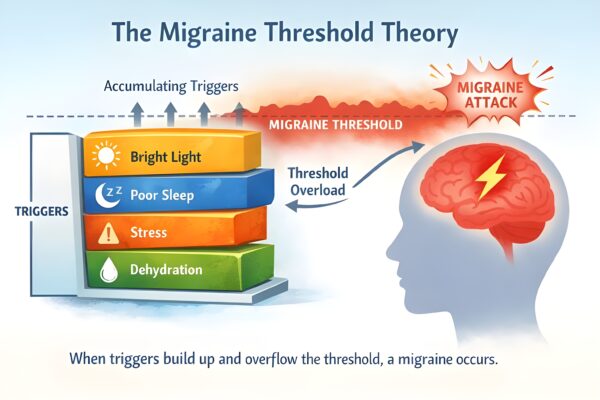
Migraine threshold theory explains that each person has a personal threshold. When the nervous system stays below that threshold, symptoms may remain manageable. When enough triggers stack up and push the system over that threshold, a migraine attack occurs.
A helpful way to picture this is like a bucket slowly filling with water.
One trigger alone might not cause an attack. But several triggers combined can overwhelm the nervous system and tip it over.
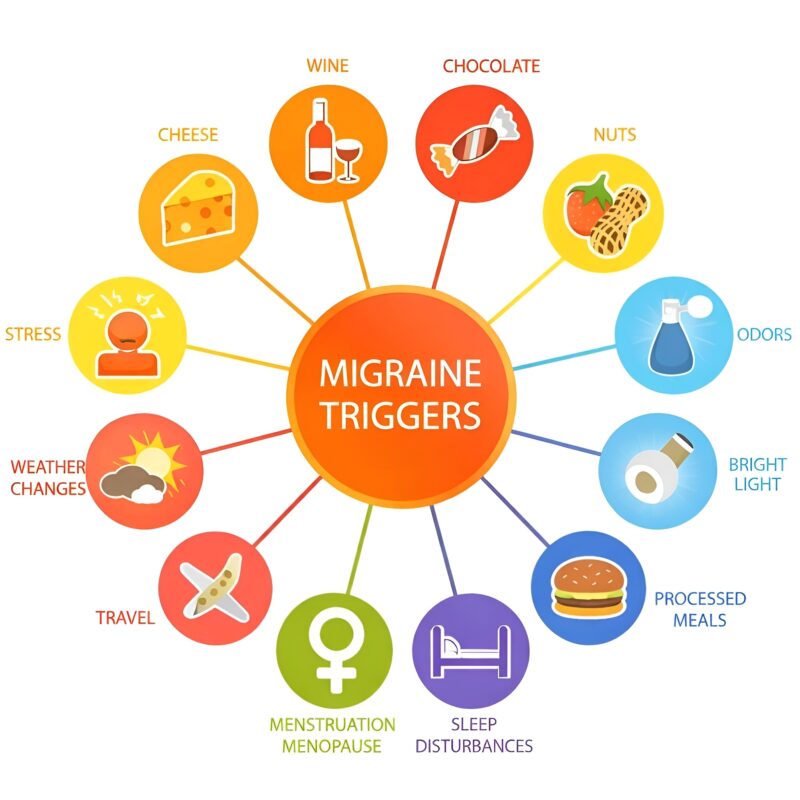
Triggers can include light sensitivity, stress, lack of sleep, hormonal changes, dehydration, screen use, skipped meals, sensory overload, or emotional strain. Each one adds a little more pressure.
This helps explain why something that felt manageable yesterday can suddenly feel unbearable today.
Migraine is not about avoiding one trigger perfectly. It is about understanding your nervous system load and recognizing when it is reaching capacity.
Why Do Migraine Triggers Work Sometimes But Not Others?
Migraine triggers often feel inconsistent. Something might trigger symptoms one day but not another. This can be confusing and emotionally exhausting.
Threshold theory helps explain this. Your baseline changes day to day depending on sleep quality, stress levels, recovery from previous attacks, and overall health.
When the nervous system is already under strain, smaller triggers can have a much bigger impact.
This is also why people living with chronic migraine or invisible illness often feel misunderstood. The internal load is not visible, but it is very real.
Light Sensitivity and Migraine: Why FL-41 Glasses Help
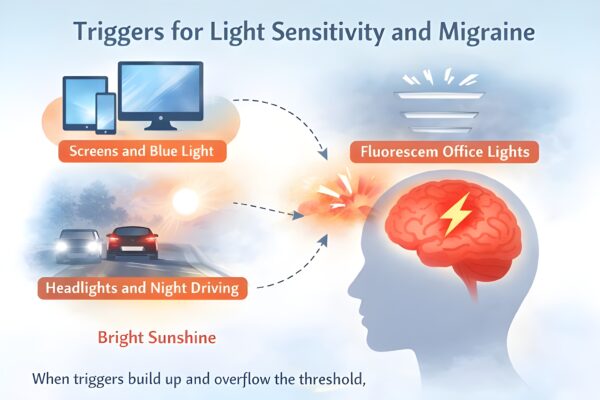
Light sensitivity is one of the most common and misunderstood migraine triggers. Artificial lighting, fluorescent lights, LED panels, screens, and glare can all quietly overload the migraine brain.
For many people with migraine, the brain struggles to process certain wavelengths of light. This increases sensory stress and pushes the nervous system closer to its threshold long before pain appears.
Before I understood this, I did what many people do. I wore sunglasses indoors.
This started during COVID. Hospitals were bright, stressful, and overwhelming. I was masked up, exhausted, and just trying to survive my shifts. Sunglasses felt like a coping tool rather than a fashion choice.
Mask on. Sunglasses on. Full PPE.
I probably looked ridiculous. I did not care.
In the short term, it helped. The brightness dulled and the glare softened.
What I did not realize at the time was that wearing dark sunglasses indoors can actually worsen light sensitivity over time. The eyes and brain begin to dark-adapt, becoming more sensitive rather than more resilient.
I thought I was protecting myself, but I was unintentionally training my nervous system to react more strongly to everyday lighting.
As a biomedical scientist working in NHS laboratories, changing the lighting was not an option. That led me to a simple realization:
If I cannot change the lights, I need to change how my eyes and brain cope with them.
That was when I began learning about FL-41 lenses and the role specific wavelengths of light play in migraine and photophobia. Unlike sunglasses, FL-41 lenses filter targeted wavelengths without forcing the eyes into darkness.
This journey is what eventually led me to create Aura Clarity, a UK-based brand specializing in FL-41 migraine glasses designed for everyday environments.
Light sensitivity does not always cause immediate pain. Often it builds quietly throughout the day, adding to overall nervous system load until the migraine threshold is crossed.
How Stress Triggers Migraine (Even After It Ends)
Stress is one of the most recognized migraine triggers, but it is often misunderstood. Stress is not only emotional. It can be physical, sensory, cognitive, or anticipatory.
Deadlines, constant decision-making, sensory noise, pressure to perform, and the stress of managing a chronic illness all place load on the nervous system.
Ironically, migraine attacks often appear once the stress eases. This is known as the let-down effect, where the nervous system finally drops its guard.
Understanding stress as nervous system load rather than personal weakness can help remove guilt and self-blame.
Sleep and Migraine: Why Consistency Matters More Than Hours
Sleep plays a critical role in regulating the nervous system and maintaining migraine stability. Too little sleep, disrupted sleep, or inconsistent sleep patterns can significantly lower migraine threshold.
Even small changes can matter later nights, irregular routines, poor sleep quality due to pain or anxiety, or oversleeping during recovery days.
While rest is essential, frequent changes to sleep patterns can confuse the nervous system and make attacks more likely.
Consistent sleep routines, gentle wind-down habits, and calm sleep environments help signal safety to the nervous system.
Blue light exposure also plays a role. Bright artificial lighting and screens in the evening can interfere with melatonin production, particularly for those who are already light sensitive.
Filtering specific wavelengths of light in the evening may help reduce visual overstimulation and support a gentler transition into rest without forcing complete darkness.
Migraine Food Triggers: Why Skipping Meals Causes Attacks
Skipping meals and dehydration are common migraine triggers and are often underestimated.
For many people with migraine, irregular eating or not drinking enough water can significantly lower the migraine threshold.
If I get hungry, I do not just feel hungry. I feel anxious, and I need to eat immediately. That is not overreacting. It is lived experience.
If I push through hunger, a migraine follows. And when it does, it is not mild.
Dehydration can be just as triggering. Even on days when everything else feels manageable, not drinking enough water can quietly tip my nervous system into overload.
This is not about restrictive diets or food rules. It is about consistency, awareness, and planning ahead.
Hormonal Migraine Triggers: Menstrual and Perimenopause Patterns
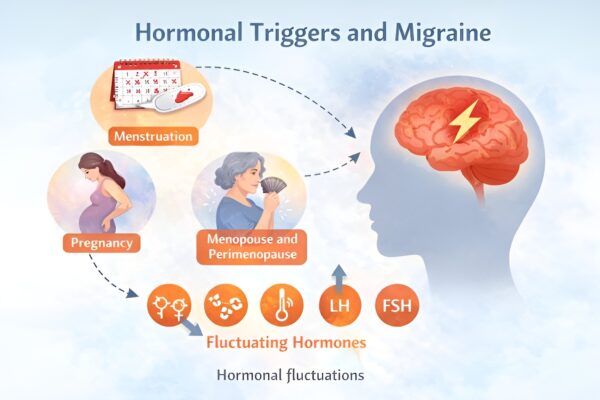
Hormonal changes are a significant trigger for many people, particularly women.
Fluctuations around menstrual cycles, perimenopause, menopause, and hormonal treatments can all affect migraine threshold.
Hormonal triggers often interact with stress, sleep, and light sensitivity, making them complex and deeply individual.
Recognizing vulnerable windows can help people approach these periods with extra care and support.
Managing Migraine Triggers Without Anxiety: The Threshold Approach
Many people feel pressure to eliminate every trigger. This can lead to anxiety, hyper vigilance, and fear around daily life.
Threshold theory offers a more compassionate approach.
The goal is not perfection.
The goal is balance.
Reducing overall load where possible creates more capacity in the nervous system. This might mean prioritizing rest, managing light exposure, supporting sleep, or recognizing early warning signs.
It is about working with your nervous system rather than fighting it.
Ready to Reduce Your Light Sensitivity Load?
Aura Clarity’s FL-41 glasses filter triggering wavelengths without dark-adapting your eyes—helping you manage light exposure as part of your threshold strategy.
Final Thoughts
Migraine triggers are rarely simple. They are layered, cumulative, and deeply personal.
Understanding migraine threshold theory helps move the conversation away from blame and towards awareness. It explains why symptoms fluctuate and why support matters.
Tracking patterns can help, but only when done with compassion rather than obsession.
Migraine is complex and individual. But knowledge truly is power when it comes to living well with an invisible illness.
Frequently Asked Questions
What is migraine bucket theory?
Migraine bucket theory (also called threshold theory) explains that migraine triggers accumulate like water filling a bucket. One trigger alone may not cause an attack, but multiple triggers stacking together can overflow your threshold and trigger a migraine.
Why do my migraine triggers feel inconsistent?
Your baseline threshold changes daily based on sleep quality, stress levels, hormonal cycles, and recovery from previous attacks. A trigger that felt manageable yesterday might tip you over today if your bucket is already fuller.
Can wearing sunglasses indoors make light sensitivity worse?
Yes. Dark sunglasses indoors cause your eyes to dark-adapt, making your nervous system more sensitive to normal lighting over time. FL-41 glasses filter specific wavelengths without forcing darkness, helping your brain adapt rather than withdraw.
Do FL-41 glasses actually help with migraine?
FL-41 lenses filter specific wavelengths of light (particularly blue-green spectrum) that overload the migraine brain. Unlike sunglasses, they reduce sensory load without dark-adapting your eyes, helping prevent light sensitivity from adding to your threshold.
