
Blog
What Living With Migraine Really Looks Like
Jan
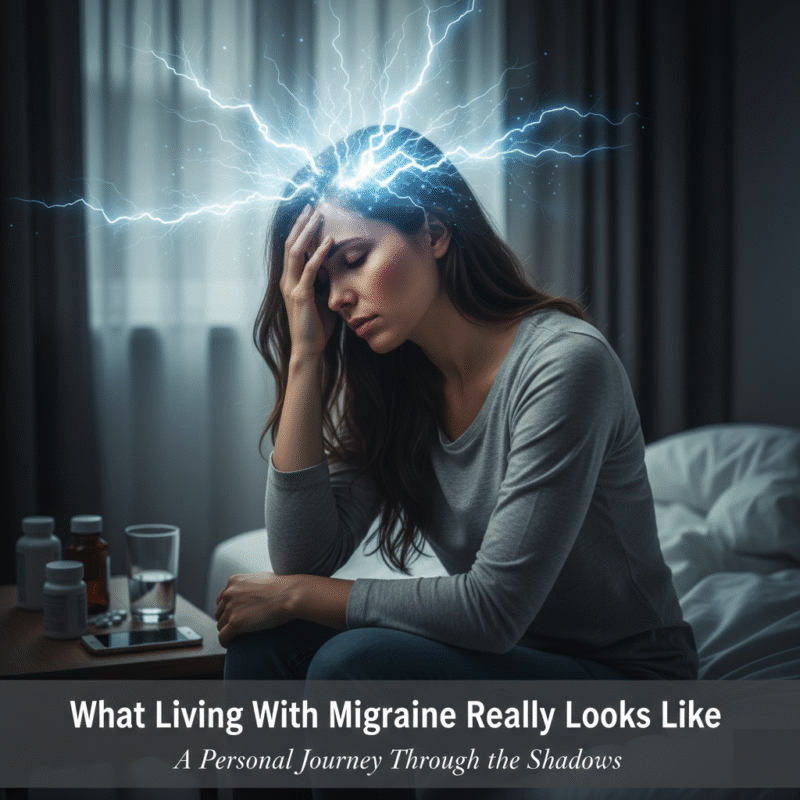
Living with migraine and light sensitivity can be exhausting, isolating, and deeply misunderstood. For many people, migraine is dismissed as just a headache, something to push through, or something that should be fixed quickly. But anyone living with chronic migraine knows it is far more complex than that.
Migraine is a neurological condition. It affects the nervous system, vision, concentration, energy levels, mood, and the ability to function in everyday environments. It does not switch off when work starts or life demands more.
Living with migraine means living with unpredictability. It means constantly adapting to a world that is often too bright, too loud, and too fast.
The Part People Do Not See
What people often see are the cancelled plans or the days you go quiet. What they do not see is the constant decision making happening beneath the surface.
- Is the lighting going to trigger symptoms?
- Can I tolerate screens today?
- If I go out now, will I pay for it later?
- Do I rest or push through?
- Do I take medication now or wait?
Migraine teaches you to live in anticipation, not of excitement, but of impact. It shapes how you plan your days, your work, and even your social life.
This is especially difficult because migraine is an invisible illness. There is often no visible sign of how unwell someone feels, which makes it easier for others to underestimate the impact.
The Guilt That Comes with Chronic Illness
One of the hardest parts of living with chronic migraine is not always the pain. It is the guilt.
- Guilt for cancelling plans
- Guilt for needing rest
- Guilt for not being as consistent as others
- Guilt for feeling like your body is letting you down
When I started working in the NHS as a biomedical scientist, migraine quickly became something I tried to manage quietly. I took a lot of time off due to migraine attacks, and every time I had to call in sick, I felt embarrassed. Explaining again that I was too unwell to work felt like I was letting people down.
That was when I started going to my GP and looking into preventive medication more seriously. At the time, I thought I was doing the right thing. But looking back now, I realize I was not doing it for myself.
I was doing it so I could work. So I could stop taking sick days. So, I could appear reliable and capable in a system that did not leave much room for invisible illness.
When the Focus Shifts
For a long time, my goal after a migraine attack was simply to recover enough to get back to work. Not to fully recover. Not to feel well. Just to function.
What changed for me was realizing that I did not want to spend my life recovering just enough to meet external expectations. I wanted to recover properly for myself.
That shift was difficult, but it was also transformative.
Instead of asking how quickly I could push through, I started asking what my body actually needed. I began to understand that putting myself first was not selfish. It was essential.
This is something many people living with chronic illness struggle with. Society rewards productivity, not wellbeing. Rest is often framed as laziness, and slowing down can trigger anxiety and self judgement.
Learning to Listen to Your Body
Learning to listen to your body takes time. Especially in a society where rest is seen as something you earn rather than something you need.
For me, this has been one of the hardest lessons. I still notice anxiety when I have to rest. There is often a feeling that I must do something first, complete a task, or be productive before allowing myself to slow down. Rest becomes a reward instead of a necessity.
What living with migraine has taught me is that our bodies give us signals long before burnout happens. Fatigue, nausea, increased light sensitivity, irritability, and brain fog are not failures. They are messages.
When those signals are ignored repeatedly, migraine often becomes louder and more disruptive.
Listening to your body means slowing down before you are forced to. It means respecting limits even when it feels uncomfortable. It means understanding that rest is not weakness. It is protection.
For people living with chronic migraine or invisible illness, learning to listen can reduce flare ups and help the nervous system recover more gently over time.
The Isolation of Invisible Illness
Migraine can be incredibly lonely. You can be surrounded by people and still feel completely alone because no one else feels what is happening inside your head, behind your eyes, or within your nervous system.
There are days when talking hurts. Days when explaining feels impossible. Days when silence feels safer.
Over time, this isolation can affect confidence, identity, and mental health. Many people with migraine feel pressure to minimize their symptoms to avoid judgement or misunderstanding.
This is why community and validation matter so much for people living with chronic illness.
You Are Not Failing Your Body
If you are living with migraine or light sensitivity and reading this, it is important to hear this clearly.
- You are not lazy.
- You are not unreliable.
- You are not weak.
You are navigating a neurological condition in a world that is not designed with invisible illness in mind. Every day you adapt, adjust, and cope in ways most people never have to consider.
That effort matters, even when it goes unseen.
Why Support Matters
Migraine takes a lot, but the right support can give some of it back.
- Support looks like being believed.
- Support looks like reducing strain where possible.
- Support looks like understanding your triggers rather than fighting them.
For me, understanding light sensitivity and finding ways to reduce visual triggers was one small but meaningful step towards feeling more in control. Not cured, but supported.
That is what people living with migraine deserve. Support instead of minimization. Understanding instead of judgement. Options instead of pressure.
Final Thoughts
Living with chronic migraine is complex. It affects far more than just your head. It shapes how you move through the world, how you work, and how you care for yourself.
There are no simple solutions. But learning to listen to your body, respecting its signals, and seeking supportive tools can make daily life feel more manageable.
If this resonates with you, you are not alone. Your experience is real. Your limits are valid. And you deserve compassion, especially from yourself.
